Competition rules explained

Navigate the essential guidelines that ensure fair and safe Brazilian Jiu-Jitsu tournaments for all competitors.

Rules

Belt system

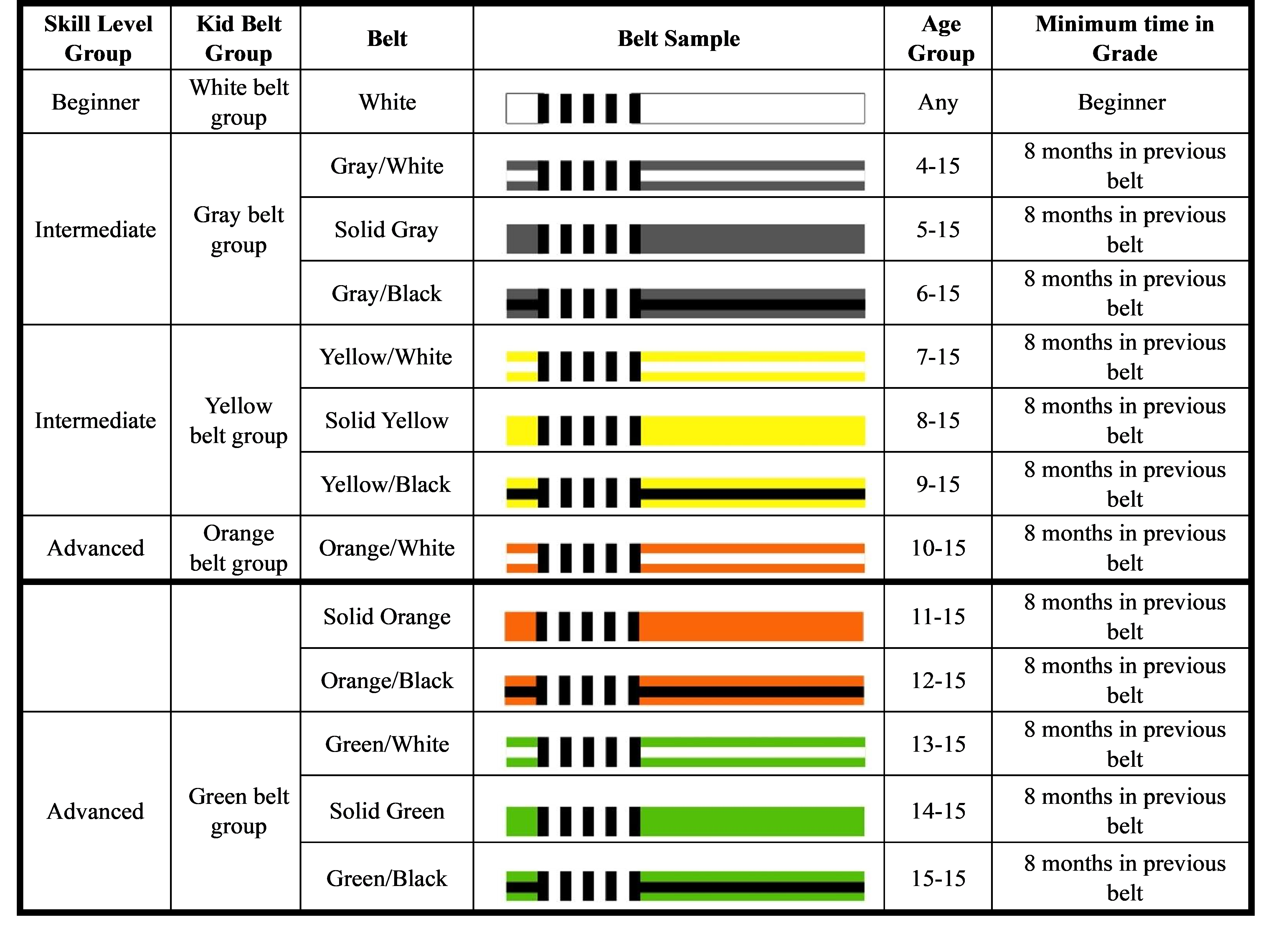
15 Years of Age and Younger

Children may be promoted through belts in the following order: white, grey/white, solid grey, grey/black, yellow/white, solid yellow, yellow/black, orange/white, solid orange, orange/black, green/white, solid green, and green/black. Each belt has 5 levels, a clear belt and then 4 stripes which may be awarded for time, knowledge, behavior, and tournament performance. Only black belts certified by the SJJIF may promote students through the belts listed.

The minimum age requirement is based and counted from the year the athlete was born (i.e.; if an athlete was born in 2002, her age is considered 10 for all of 2012).  However, a child competitor will not be authorized to compete at the same belt level if they are the champion at the same SJJIF tournament for 2 years in a row in a given bel

16 years of age and older

Adults may be promoted through belts in the following order: white, blue, purple, brown and black.  Each belt has 5 levels, a clear belt and then 4 stripes that may be awarded for time, knowledge, behavior, and tournament performance.

 Instructors decide how long it takes for a student to be promoted, as long as the minimum times  required for each belt are fulfilled. However, a competitor will not be authorized to compete for a 3rd time at the same belt level if the competitor has been the champion of the same tournament for 2 years in a row in a given belt, with the exception of black belts.
The SJJIF recognizes the following additional guidelines to the juvenile and adult belt system:
  • Any grey, yellow, orange, or green belt automatically becomes a blue belt at the year of turning 16 years of age.
  • In order to be graded a purple belt at 16 years of age it is required that the athlete has spent at least 2 years as a green belt.
  • In order to be graded a purple belt at 17 years of age, it is required that the athlete has spent at least 1 year as a green belt and 1 year as a blue belt.
  • In the case where an athlete was graded from green belt straight to purple belt, then the minimum time required before he can be awarded the brown belt is 2 years
The following is the criteria for which instructors may promote students:
  • A black belt may promote students from white belt to purple belt.
  • A 1st degree black belt may promote students from white belt to brown belt.
  • A 2nd degree black belt may promote students from white belt to black belt.

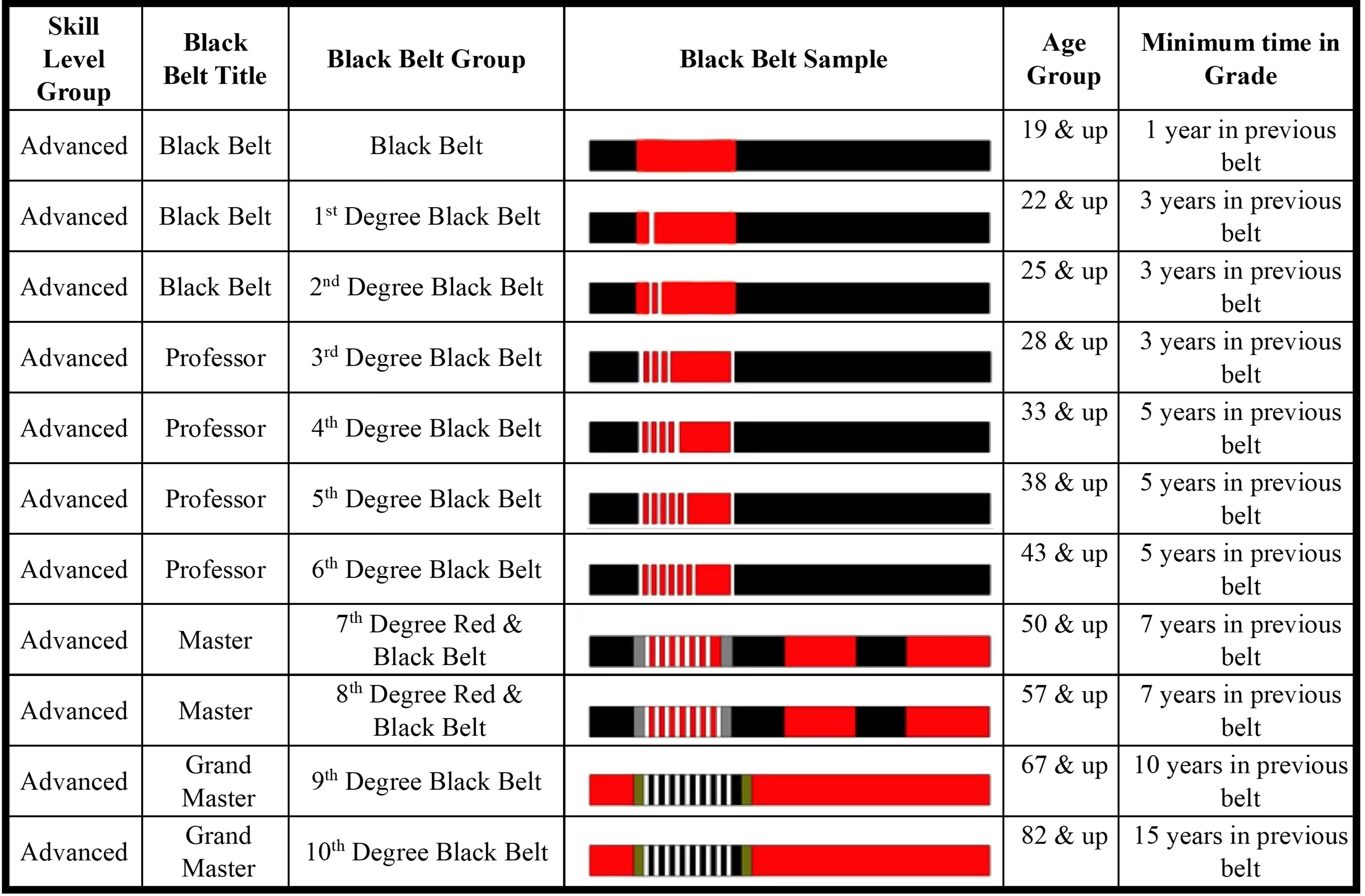
Only athletes 19 years of age or older may be awarded a black belt.

In order to request a black belt certificate, it is necessary to be currently affiliated with the SJJIF.  To be awarded degrees as a black belt, it is necessary that the black belt be a current SJJIF member and listed as a main instructor or assistant instructor at an SJJIF member school.  To be awarded grandmaster belts, it is necessary that the black belt be a current SJJIF member and listed as a main instructor or assistant instructor at an SJJIF member school.

Black belts have seven levels, a black belt plus 6 degrees that can only be awarded by the SJJIF according to the following guidelines:

Belt Integrity

Belt integrity refers to the accuracy in which an athlete’s belt reflects their skills and knowledge of the art. The SJJIF believes in the importance of all practitioners following the above minimum time in a grade prior to promotion and verifies all members’ belt promotions with their professor in an effort to preserve belt integrity and lineage.

The SJJIF has implemented Belt Integrity rules to avoid the practice of professors not promoting athletes to the next rank or when an athlete competes at a skill-bracket deemed less rigorous than their actual level of competitive ability, commonly referred to as “sandbagging”.  The SJJIF will have no tolerance for “sandbagging” at any sanctioned event.  Every competitor is subject to the SJJIF investigating their belt with academies and coaches or examining past official and unofficial tournament results.

The SJJIF will not allow an athlete who has proven to be a Judo or Ju Jitsu Black Belt and/or has  experience in wrestling competing at the college level, national level, Olympic wrestling level, or in Greco-Roman, Sambo, or that has fought MMA professionally to compete in any competition as a white belt.

Athletes who do not meet the requirements put forth in championship guidelines or those in the SJJIF Rulebook may be disqualified at any moment prior to, during, or following the competition.

The athlete may only compete as the belt they are registered with under the SJJIF (or its affiliates). If the athlete is promoted before the minimum age or the minimum time requirement of the  previous belt is met, he/she cannot compete in the current belt or the previous one.

Once an athlete’s gradation occurs, the athlete cannot compete in the previous belt anymore. If an athlete gets promoted during a competition after the division is done, the athlete will be unable to compete in the open weight division.

A competitor cannot compete in an SJJIF event for a 3rd time once he or she has placed in 1st place twice for the same event, in same belt rank, except for black belts.
Weight Divisions

SJJIF Weight Divisions and Fair Play

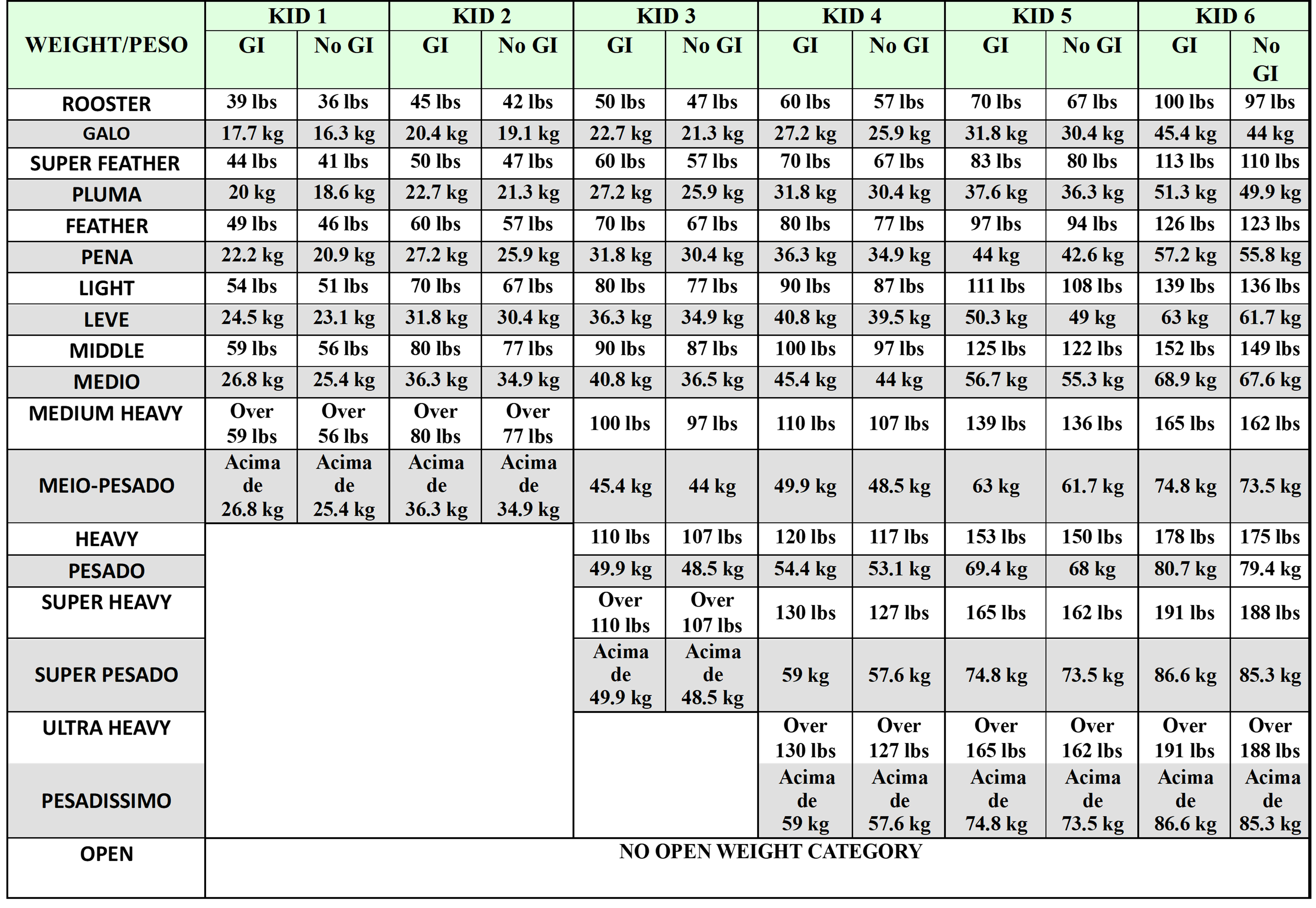
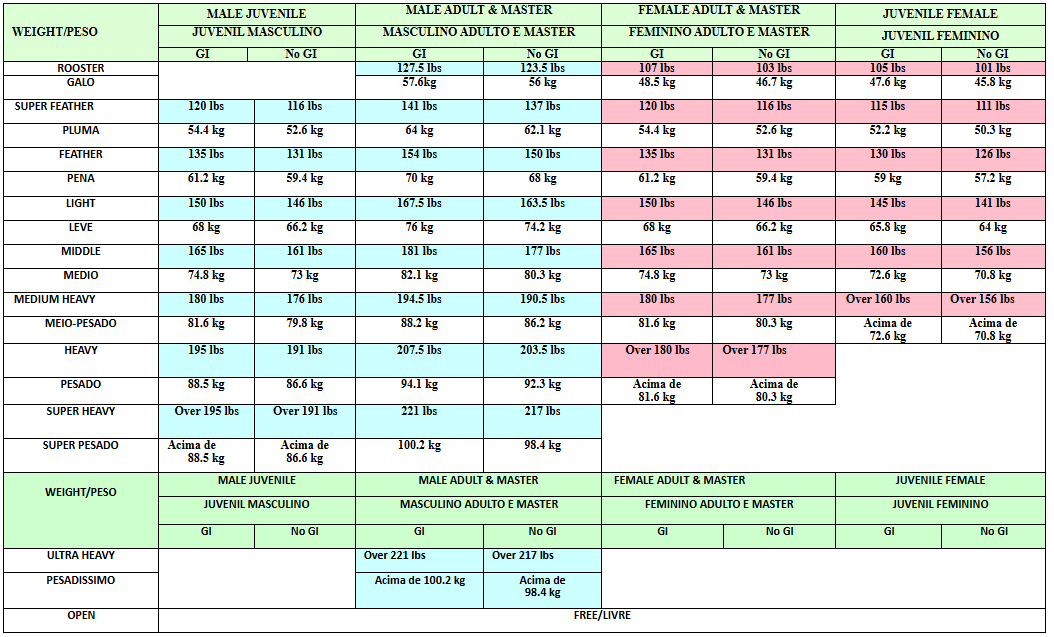
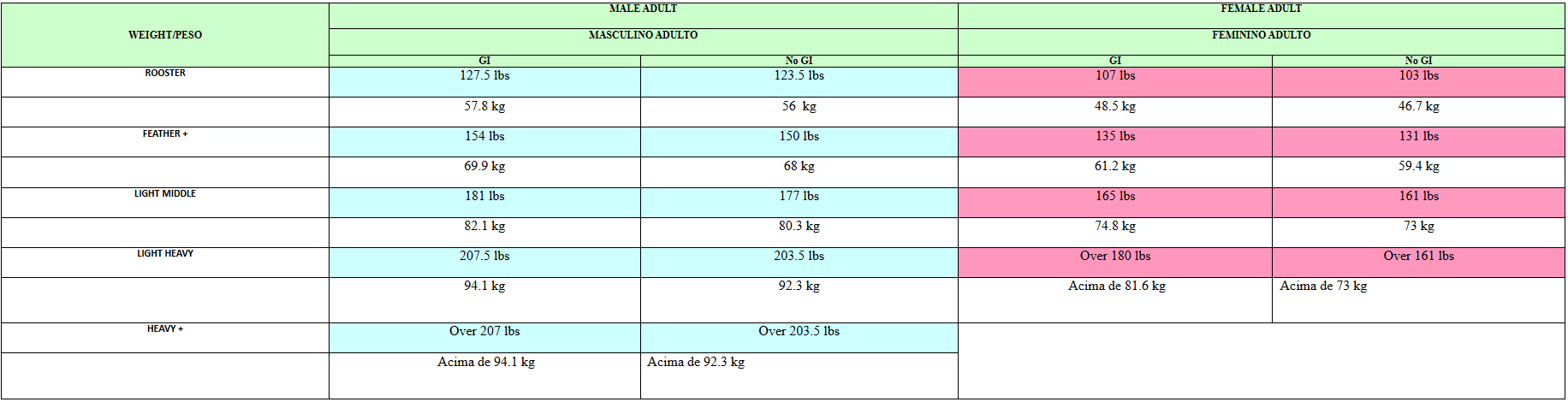
The SJJIF utilizes weight divisions to help minimize injuries and reduce weight advantages. Contrary to popular belief, size plays an important role in Jiu-Jitsu just as it does in other competitive sports. Although a highly skilled smaller athlete may defeat a larger, less skilled opponent, history shows that size differences often increase the risk of injury

Brazilian Jiu-Jitsu is a size-factor sport, and weight divisions exist to ensure that skill—not size—determines the outcome. Open divisions are also available at tournaments, and participation in these is optional for Juvenile, Adult, and Master participants. Competitors are grouped by the year of birth rather than actual age, and boys and girls will not compete together after the age of 12.

Health & Safety Guidelines

The SJJIF strongly discourages weight reduction through dehydration, excessive calorie restriction, or the use of diuretics, laxatives, or self-induced vomiting. Children are encouraged to compete at their natural weight, and the SJJIF does not support or promote weight cutting in any form.

Weight Requirements

Competitors (or parents of children competitors) are responsible for ensuring that weight requirements are met while wearing the GI and/or rash guard. Any athlete who exceeds their registered weight is subject to disqualification.

Weight Guidelines

Weigh-in guidelines for competitors

All Athletes must clear weight prior to their first match.

Athletes must have their uniform for competition on for weigh in.

Athletes are allowed to weigh in without knee or elbow braces, but they will have to be wearing them at the time of the uniform inspection.

The athlete cannot step on the scale with shoes or any item besides his/her regular uniform and equipment permitted for use during matches.

Each athlete shall only mount the official scale of the event to have his/her weight taken once unless authorized.

Download Rules and regulation

If you have questions regarding a specific tournament or your registration, please check our FAQ page. If you still need to reach us, email us at tournament@nabjjf.com